Concrete is never completely dry—it always retains moisture in equilibrium with its environment. Using ASTM F2170 ERH testing, most flooring manufacturers require slab moisture levels between 70–75% relative humidity before installation. In most water losses, surface moisture evaporates during normal structural drying. However, if a slab remains too wet, the underlying cause must be identified—such as vapor barrier failure, leaks, or external water intrusion. Understanding concrete moisture behavior and applying proper testing protocols prevents flooring failures and ensures successful water damage restoration outcomes.
Chuck Boutall
Educational Coordinator
June 19, 2021
5 Min.
The real answer?
Never.
That may sound dramatic, but from a scientific standpoint, concrete is never completely dry. Like most building materials, it retains a certain amount of moisture when in equilibrium with its surrounding environment. However, compared to many other materials in a structure, concrete is particularly wet—even when considered “dry enough.”
Understanding Concrete Moisture & ERH
Type image caption here (optional
4
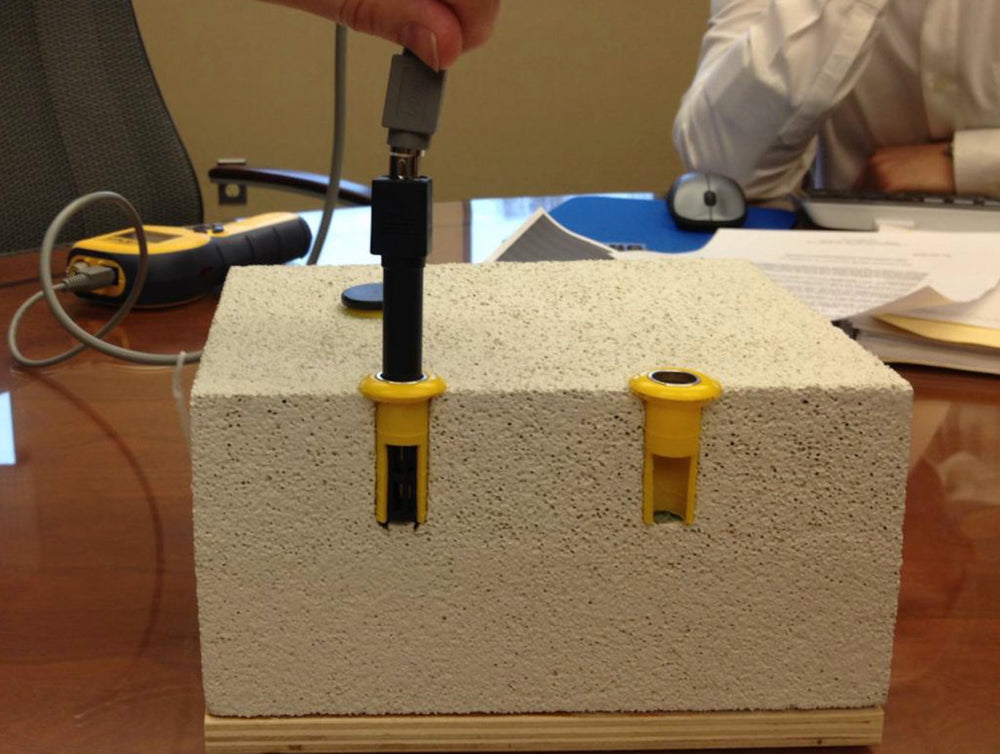
Using ASTM F2170 in-situ probe testing, often referred to as the Equilibrium Relative Humidity (ERH) test, most flooring manufacturers require concrete moisture levels to be between 70% and 75% ERH before installation warranties apply.
To put that in perspective:
70–75% ERH corresponds roughly to
0.70–0.75 water activity
That makes concrete one of the wettest materials we routinely call “dry” in the built environment.
Concrete is porous. It absorbs, retains, and releases moisture continuously in response to surrounding temperature and humidity conditions. It is dynamic—not static.
Surface Water vs. Saturation
In water damage restoration, understanding how concrete interacts with water is critical.
Except in cases of prolonged flooding, most water losses:
Cover the slab surface for only a few hours
Rarely last more than a day
Do not provide sufficient time for deep saturation
In many typical water losses, moisture is limited to the surface layer of the slab. With proper environmental drying—especially in timber-framed structures—surface moisture often evaporates during the overall structural drying process.
This is why concrete sometimes “dries” at the same time the rest of the structure returns to normal equilibrium.
When the Slab Stays Too Wet
If testing shows the slab remains above manufacturer thresholds after the building is otherwise dry, there is usually an underlying issue.
Common causes of persistent slab moisture include:
Missing or insufficient vapor barriers beneath the slab
Capillary moisture migration from the ground
Leaking water pipes below the slab
Hydronic heating system leaks
Irrigation systems spraying the building exterior
Chronic drainage problems
If excess moisture remains, the solution is not simply more drying time.
The true solution is identifying and correcting the source.
Why Proper Testing Matters
Flooring failures can be expensive and disruptive. If flooring is installed over concrete that exceeds manufacturer moisture limits, the results may include:
Adhesive breakdown
Delamination
Mold growth beneath flooring
Warranty denial
Costly replacement
Using proper ERH testing procedures helps prevent these outcomes and protects all stakeholders—contractors, owners, and insurers alike.
The Restoration Perspective
From a water damage restoration standpoint, the key lessons are:
Always determine the source of moisture
Understand the difference between surface wetting and saturation
Use appropriate testing methods
Verify slab conditions before flooring installation
Avoid assumptions about “dry” concrete
Concrete is never truly dry. It simply reaches equilibrium.
And when it doesn’t, there is always a reason.
Final Thoughts
Concrete is one of the wettest materials we routinely work with, even when it meets installation standards. Recognizing that fact helps restoration professionals avoid costly mistakes and misdiagnosed drying issues.
When a slab remains too wet for flooring, the question isn’t “Why won’t it dry?”
Three levers. Pull all three and the whole company moves.
Lever360 is three products built around the same restoration job. Software runs the operation. Learning Lever trains the team. RTI certifies the trade. Use one. Use all three — they compound.
Software is one lever
You're running the company here. The other two make it compound.
Software runs the operation — every job, crew, dollar and conversation lives here. Add Learning Lever and RTI and the same techs ramp faster, bill higher, and stay longer. One lever moves the company. Three move it harder.
Learning Lever is one lever
You're training the team here. The other two make the training stick.
Learning Lever onboards faster and keeps the whole team sharp. Software is where that training shows up in the work. RTI is where it becomes a credential customers trust. Pull one — pull all three and the math compounds.
RTI is one lever
You're certifying the trade here. The other two carry the credential to the field.
RTI certifies the trade — IICRC WRT, ASD, AMRT, FSRT and beyond. Software runs the company those certified techs work for. Learning Lever ramps everyone in between. One lever moves things. Three move the whole crew.